
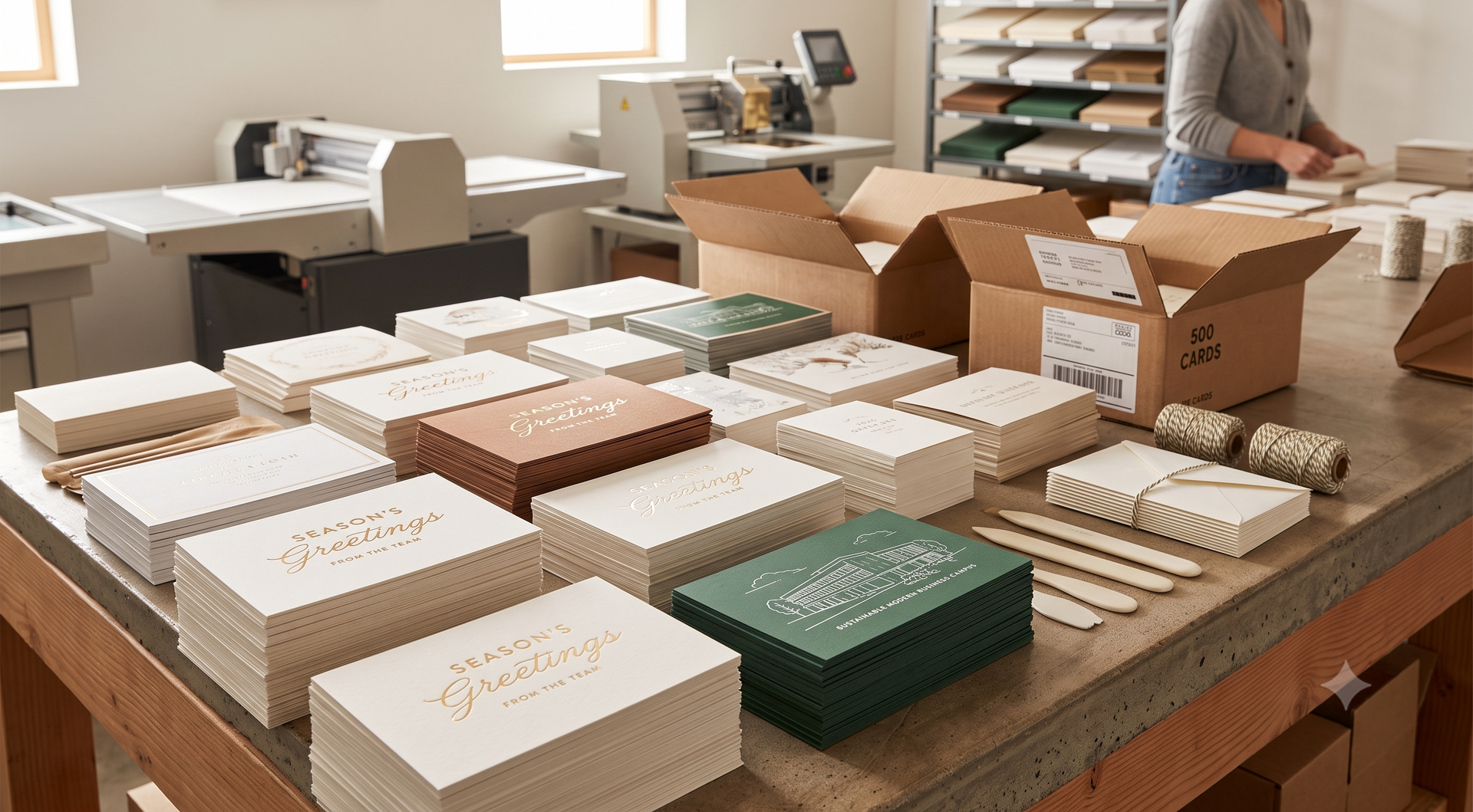
Elevate Your Print with the Right Materials

For CPAs, bookkeepers, and tax professionals, every detail matters—including your printed materials.

From business cards to client mailers, the paper and finish you choose directly impact how your brand is perceived. The right combination communicates credibility, attention to detail, and trust. The wrong choice can do the opposite.


Here’s a simple guide to help you choose the right paper and finish for your most common print projects—so your materials reflect the level of professionalism your clients expect.


Start With the Purpose of Your Piece

Before selecting paper, think about how your materials will be used.


Are you:

  • Mailing tax reminders or updates?
  • Handing out business cards at networking events?
  • Sharing informational brochures with clients?


Each use case requires a different balance of durability, flexibility, and presentation. When the purpose is clear, choosing the right paper becomes much easier.


Recommended Paper for Common Print Materials

Brochures

Brochures are often folded, so they need to be flexible without feeling flimsy.


A strong choice is 100# gloss text paper, which:

  • Folds cleanly
  • Feels substantial in hand
  • Prevents ink from showing through


This creates a polished, easy-to-read piece that’s ideal for explaining services or processes.


Catalogs & Booklets

If you provide service guides or financial resources, presentation matters.


You’ll typically choose between:

  • Self-cover: Same paper throughout
  • Plus cover: Heavier stock for the cover, lighter for inside pages

Recommended setup:

  • Inside pages: 100# coated text
  • Cover: 100# cover stock


This combination creates a more durable, professional finish without adding unnecessary bulk.


Business Cards

Your business card is often your first impression.


Most professionals choose 14pt cover stock, which offers:

  • A sturdy, premium feel
  • Clean print quality
  • Long-lasting durability


For a more elevated look, thicker stocks (16pt–18pt) or recycled options can further reflect your brand values.


Postcards

Postcards are a powerful tool for client communication—but they need to hold up in the mail.


We recommend:

  • 14pt gloss cover stock for durability
  • Optional UV coating for added protection


This ensures your message arrives looking clean, professional, and intact.


Key Paper Characteristics to Know

Understanding a few basics can help you make better decisions.


Paper Weight & Thickness

Heavier paper generally feels more premium and durable. For example, postcards must meet minimum thickness requirements for mailing. Thickness (caliper) also affects how your piece feels in hand—an important factor for client-facing materials.


Opacity

Opacity determines how much ink shows through from the other side.


Higher opacity:

  • Improves readability
  • Prevents distractions
  • Creates a cleaner, more professional look


This is especially important for documents with dense text or bold graphics.


Brightness

Brightness affects how colors and text appear.


Higher brightness:

  • Produces sharper text
  • Makes colors more vibrant
  • Improves overall clarity


This is key for materials where readability and detail matter—like financial summaries or client communications.


Choosing the Right Finish

Finishes don’t just change how your materials look—they affect durability and feel.


Gloss Coating

  • Enhances color and sharpness
  • Creates a polished, modern look
  • Great for marketing materials


Matte or Silk Coating

  • Softer, more refined appearance
  • Easier to read under bright light
  • Ideal for professional, understated branding


UV Coating

  • High-gloss, protective finish
  • Resists scratches and moisture
  • Best for postcards and high-impact pieces


Why It Matters for Your Business

Your printed materials are a reflection of your brand.


For financial professionals, where trust and credibility are everything, details like paper weight, finish, and print quality help reinforce your expertise before a conversation even begins.


Well-chosen materials:

  • Build confidence with clients
  • Elevate your brand image
  • Support consistent, professional communication


Final Thoughts

Choosing the right paper and finish doesn’t need to be complicated. With a clear purpose and a few smart decisions, your print materials can feel as professional as the services you provide.


At Hillview DPM, we help CPAs, bookkeepers, and tax professionals select the right materials for every project—so your brand always shows up at its best.


Ready to upgrade your print? Let’s create materials that reflect the quality of your work. Call Today.


Revised By: Beth Walker
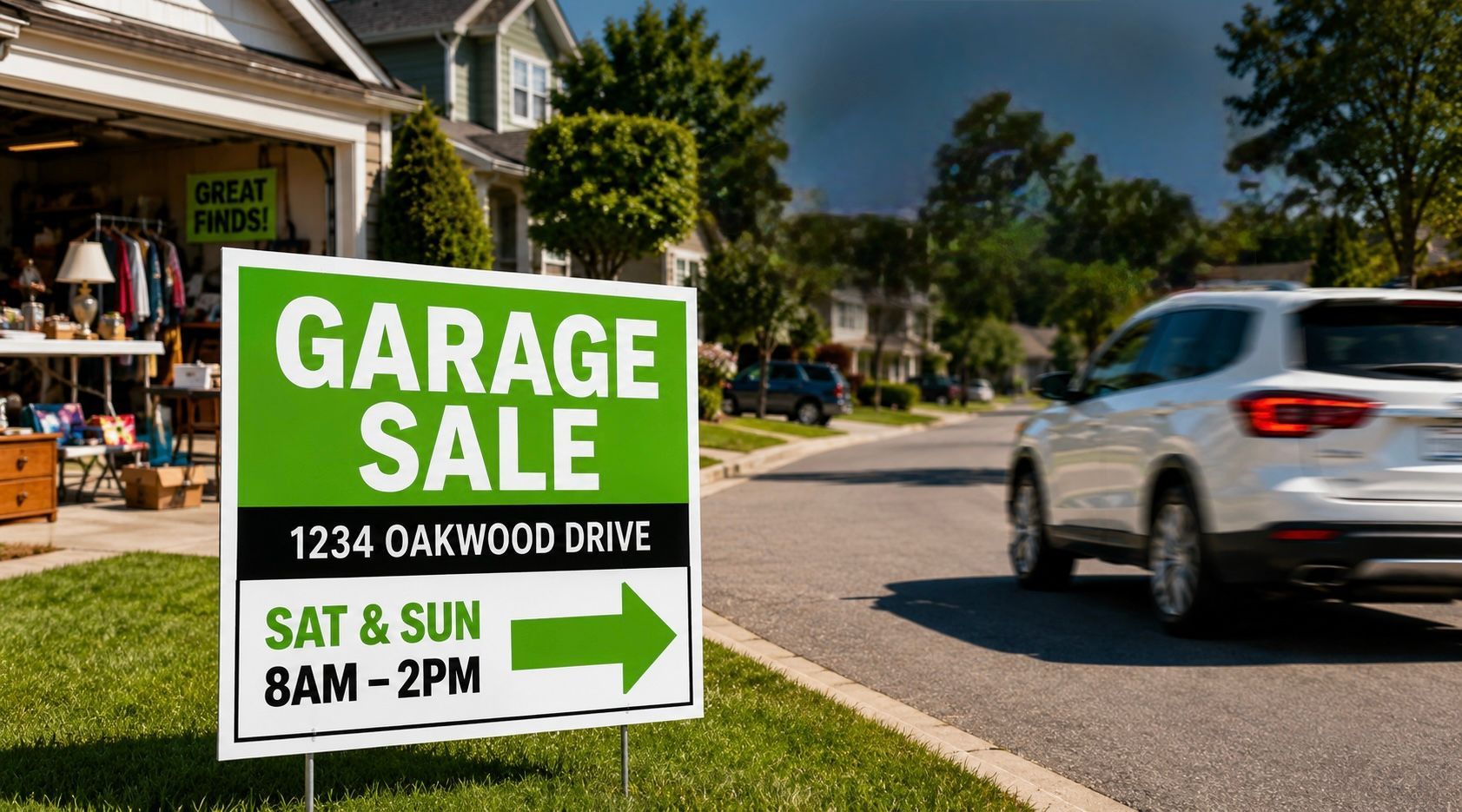
Turn drive-by traffic into buyers with bold, clear garage sale signs.
By Beth Walker May 6, 2026
Great garage sale signs drive traffic—use bold text, high contrast, clear directions, and multiple signs to turn drive-bys into buyers.
A confident Bay Area small business owner reviews a glossy trifold brochure at a modern desk.
By Beth Walker April 22, 2026
Print isn't dead — it's your competitive edge. Learn how Bay Area businesses use print + digital together to cut through the noise and win more customers.
Make Graduation Unforgettable with Custom Signs
By Beth Walker April 1, 2026
Celebrate your graduate with custom signs and banners that stand out, feel personal, and create lasting memories for your family and community.
By Beth Walker February 19, 2026
How to design business signs that attract attention, reflect your brand, and bring customers through your doors with simple, strategic design choices.
By Beth Walker February 5, 2026
Smart custom signs attract attention, guide customers, and strengthen your brand when planned, designed, and printed with purpose.
Order smarter using a digital print partner
By Beth Walker January 21, 2026
Avoid costly print mistakes by ordering smarter, choosing digital print partners, reviewing paper samples, and proofing before you print.
Business woman deciding on a print marketing strategy
By Beth Walker January 7, 2026
Small businesses see better results when they know their audience, market consistently, and connect across print and digital channels.
By Curtis Walker II, MBA May 19, 2020
THE FACT: Paper is one of the few truly sustainable products PAPER IS MADE FROM WOOD, A NATURAL RESOURCE THAT IS RENEWABLE, RECYCLABLE AND CAN BE MANAGED SUSTAINABLY. "Besides easily recognizable paper products (e.g. writing paper or paper towels), more than 5,000 products can be made from recycled paper." U.S. Environmental Protection Agency, 2016 1 In North America, paper is recycled more than any other commodity and the benefits include: extending the wood fiber supply ; reducing greenhouse gas emissions by avoiding methane emissions (released when paper decomposes in landfills or is incinerated); contributing to carbon sequestration ; reducing energy needed for paper production ; and saving landfill space . 1 These features, combined with the North American paper industry’s advocacy of responsible forestry practices , certification , the use of renewable biomass and advances in efficient paper-making technology , make paper one of the most sustainable products we use . • About 39% of the fiber used in paper-making in the U.S. is obtained through recycling . The rest comes from wood that is typically obtained through: 1) thinning of forest stands being grown to larger diameters to provide raw material for production of lumber and plywood 2) patch clear-cutting of smaller diameter trees managed for pulp production, and/ or 3) collection of chips and sawdust produced as by-products in the production of lumber. 2 • In Canada, 87% of the wood fiber used to make paper comes from a blend of sawmill residues (59%) and recycled paper (28%). 3 • The paper industry adheres to respected third-party certification standards, ensuring the paper you use has come from a sustainable forest source . These include the Forest Stewardship Council® (FSC®); the Sustainable Forestry Initiative® (SFI®) program; the American Tree Farm System (ATFS) and systems endorsed by the international Programme for the Endorsement of Forest Certification (PEFCTM). 4 • Globally, only about 10% of the world’s forests are certified – the majority of which are in North America . By sourcing certified products from a variety of credible standards, buyers are sending a message that they support sound forestry. 5 • Wood fibers can be grown, sourced and reused in a responsible way . Maximizing the use of recycled fibers and sourcing virgin fiber from credibly certified natural forests and plantations can reduce paper’s ecological footprint.” 6 1 U.S. Environmental Protection Agency, 2016 2 Dovetail Partners, 2016 3 Forest Products Association of Canada, 2012 4 American Forest & Paper Association, 2014 5 Sustainable Forestry Initiative, 2013 6 World Wildlife Fund, 2015 This article was originally published by The international Two Sides network, and can be found here
Hillview Design Print Media Icon
By Curtis Walker, II MBA February 20, 2020
Four simple ways to slow down to sell faster. Get the customer to move backward in their buying process. Find out where the customer is in their buying process. Probe for a second customer need. Schedule follow-up after your demo.
By Curtis Walker II, MBA February 19, 2020
THE FACT: IN NORTH AMERICA, WE GROW MANY MORE TREES THAN WE HARVEST THERE ARE 20% MORE TREES IN THE U.S. TODAY THAN THERE WERE ON THE FIRST EARTH DAY CELEBRATION IN 1970. ¹ "The reality is that the greatest incentive for continued investment and retention of our nation’s forests is a stable market for paper and other wood products." Dovetail Partners ² Paper manufacturers encourage forest sustainability through their purchase and use of certified wood fiber and by promoting sustainable forest management policies and practices at home and around the globe. By providing a dependable market for responsibly grown fiber, the paper industry encourages landowners to manage their forestland instead of selling it for development or other non-forest uses.², ³ • Net forest area in the U.S. has been stable since the early 1900’s and has increased from 754 to 766 million acres between 2005 and 2015 . Net volume of growing stock increased by over 10% between 2005 and 2015. 4 Canada’s forest area of 857 million acres has been quite stable over the past 25 years. 5 • Each year forests in the U.S. and Canada grow significantly more wood than is harvested. In the U.S., average net annual increase in growing-stock trees nationwide is about 26 billion ft³. 6 In 2015, Canada harvested just over 5.6 billion ft³ of timber, well below the estimated sustainable wood supply level of 7.98 billion ft³. 7 • Claims like “go paperless – save trees” create a false impression that forests are a finite resource, being destroyed . In truth, North American forests are a renewable resource that is continuously replenished using sustainable forest management. 8 • More than half the forest land in the U.S. is owned and managed by about 11 million private forest owners . Private forest lands provided over 90% of the domestically produced wood and paper products in 2017. • The income landowners receive for trees grown on their land encourages them to maintain, sustainably manage and renew this valuable resource . 9 • On privately owned timberlands, overall inventories increased 6.2% between 2008 and 2014 and forest growth exceeded harvest removals . 10 • Avoiding the use of wood is not the way to protect forests for the long term . It is precisely the areas of the world that consume the least wood that continue to experience the greatest forest loss. 8 1 American Forest & Paper Association, 2013 2 Dovetail Partners, 2016 3 World Wildlife Fund, 2015 4 United Nations FAO, 2015 5 Natural Resources Canada, 2017 6 Oswalt et al., 2014 7 Natural Resources Canada, 2017 8 Dovetail Partners, 2014 9 USDA, 2017 10 Forest2Market, 2016 This article was originally published by The international Two Sides network, and can be found here