
A Practical Guide to Custom Signs That Actually Drive Business

Custom signs do more than fill space—they grab attention, guide customers, promote offers, and strengthen your brand every day.

From logo signs and promotional displays to wayfinding and event signage, the right custom sign helps people find your business, understand what you offer, and feel confident choosing you. This guide breaks down how to plan, design, and select custom signs that truly work—without making the process complicated.


Start With a Plan

Before choosing designs or materials, start with a clear plan. Taking time to think through a few basics upfront will save you money, reduce revisions, and lead to better results.


What’s the Purpose of Your Sign?

Every sign should have one main job. Common goals include:

  • Promoting a sale, product, or event
  • Helping customers navigate your space
  • Increasing brand visibility
  • Sharing important information


When the purpose is clear, it’s easier to decide the right size, format, and messaging.


Who Is Your Audience?

Your sign should speak directly to the people you want to reach. Think about:

  • Who your customers are
  • What catches their attention quickly
  • What information they need most


Your audience influences everything—from wording and colors to font size and placement.


Where Will the Sign Be Displayed?

Placement plays a huge role in effectiveness. Ask yourself:

  • Will the sign be indoors or outdoors?
  • How far away will it be viewed from?
  • What lighting or surroundings will it compete with?


Different environments require different materials, and visibility depends heavily on location.


Choose the Right Type of Sign

Once you’ve planned your project, you can choose the best sign type for your needs.


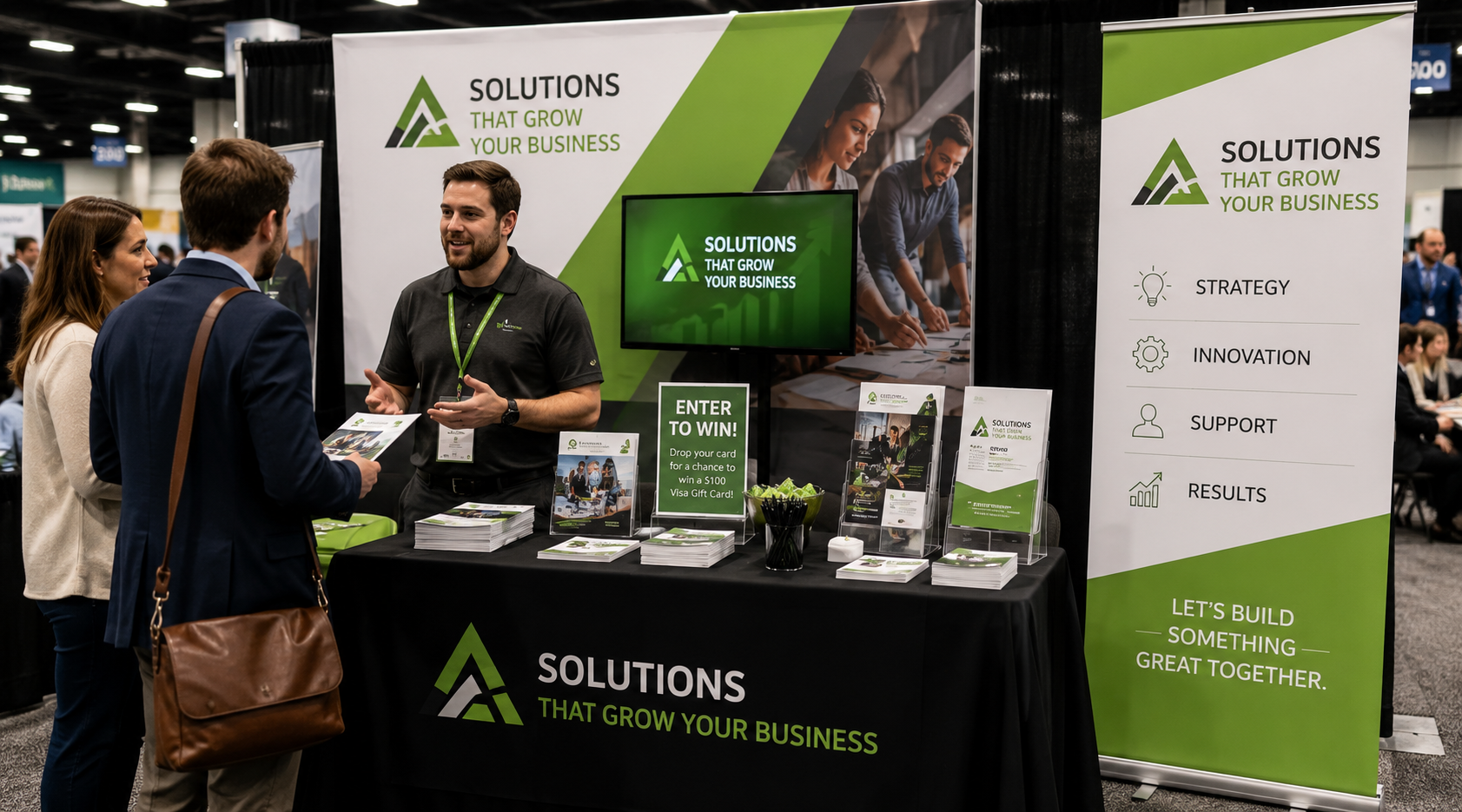
Event & Trade Show Signs

  • Retractable or X-stand banners
  • Table tents and table towers
  • Branded tablecloths
  • Posters


These help create a professional look, draw people in, and make your booth stand out.


Indoor Business Signs

  • Ceiling danglers and shelf danglers
  • Posters and menu boards
  • Wall and floor decals
  • Wall signs and banners


Indoor signs guide customers, promote offers, and reinforce branding right at the point of decision.


Outdoor Business Signs

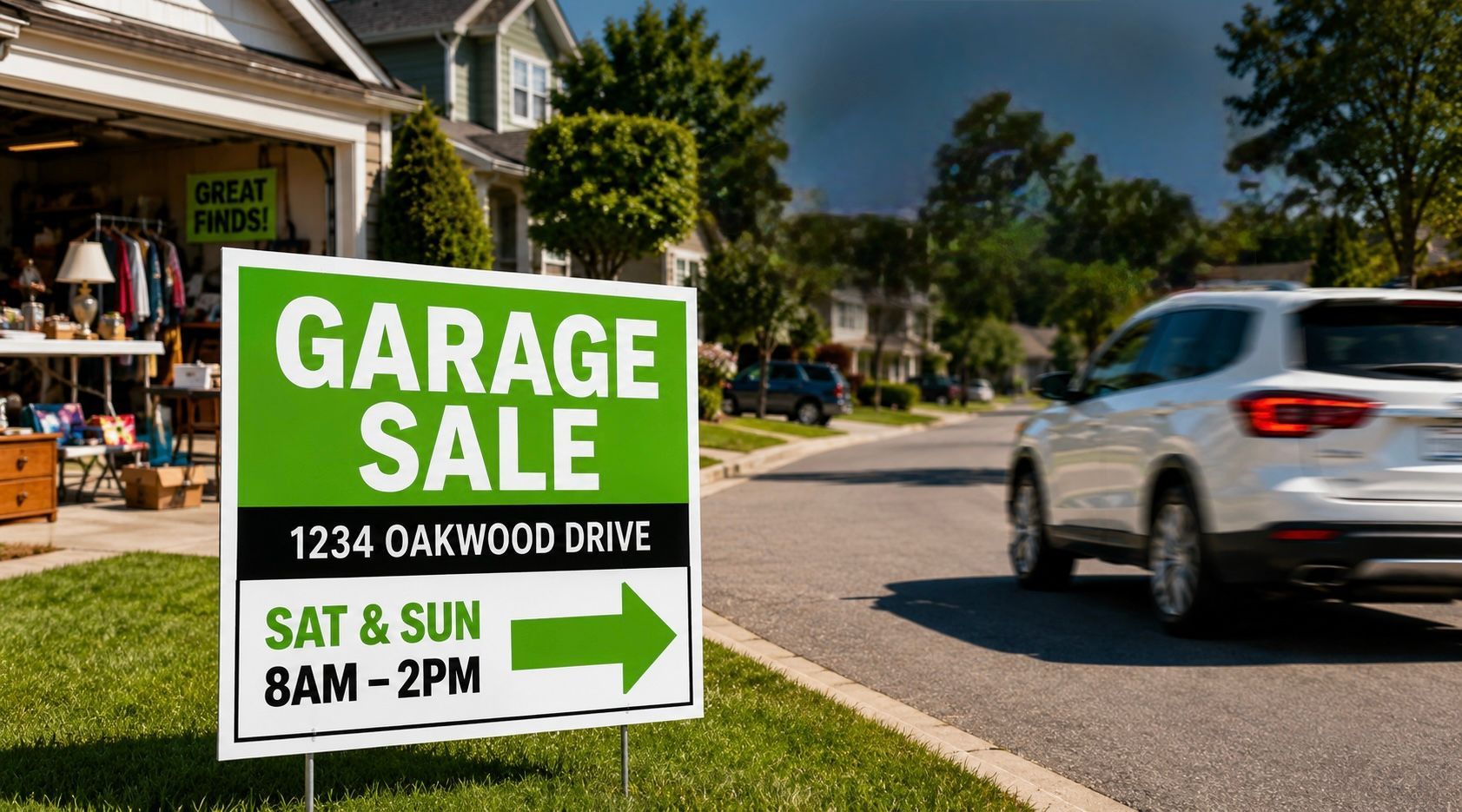
  • Yard signs and banners
  • Window decals
  • Aluminum and plastic signs
  • Blade, feather, and backlit signs


Outdoor signage helps customers find you, notice you, and remember your brand.


Vehicle & Mobile Signs

  • Window graphics
  • Car magnets
  • Vinyl decals


These turn your vehicle into a moving advertisement wherever you go.


Office & Lobby Signage

  • Acrylic logo signs
  • Directional signs
  • Wall decals and table tents


Office signage adds credibility and reinforces your brand from the moment someone walks in.


Design a Sign That Gets Noticed

Effective signage is clear, readable, and intentional.

  1. Use Easy-to-Read Fonts

       Avoid overly decorative fonts. Clean, bold lettering ensures your message is readable from a distance.


    2. Keep the Design Simple

       Focus on the essentials, too many elements compete for attention and weaken your message:

  • Logo
  • Short message
  • Visual
  • Clear call to action


   3. Choose Colors Strategically

       Brand colors are important, but contrast matters just as much. High-contrast designs improve visibility and readability.


   4. Use High-Quality Images

       Low-resolution images show quickly in print. Always use high-resolution files (300 DPI minimum) and vector logos when possible.


   5. Choosing the Right Sign Printing Partner

       A good printing partner does more than press “print.” Look for a company that:

  • Offers guidance and recommendations
  • Helps you choose the right materials
  • Has experience across industries
  • Supports you from idea to installation


At Hillview DPM, we help businesses choose signage that fits their goals—backed by over 35 years of printing experience.


Final Thoughts

Custom signs don’t need to be complicated to be effective. With clear goals, smart design choices, and the right printing partner, signage can become one of your most reliable marketing tools. If you’re ready to bring your custom sign project to life, we’re here to help.


Get started on your custom sign with Hillview DPM today.


Revised by: Beth Walker
Source: QuestGraphics

A millennial couple receiving print marketing from a real estate agent that is personal & memorable
By Beth Walker May 22, 2026
Print marketing helps real estate agents stand out, build trust, and stay top of mind with buyers and sellers in a crowded digital world.
Turn drive-by traffic into buyers with bold, clear garage sale signs.
By Beth Walker May 6, 2026
Great garage sale signs drive traffic—use bold text, high contrast, clear directions, and multiple signs to turn drive-bys into buyers.
A confident Bay Area small business owner reviews a glossy trifold brochure at a modern desk.
By Beth Walker April 22, 2026
Print isn't dead — it's your competitive edge. Learn how Bay Area businesses use print + digital together to cut through the noise and win more customers.
Make Graduation Unforgettable with Custom Signs
By Beth Walker April 1, 2026
Celebrate your graduate with custom signs and banners that stand out, feel personal, and create lasting memories for your family and community.
By Beth Walker March 19, 2026
Choose the right paper and finish to elevate your print, build trust with clients, and present your business with clarity and professionalism.
By Beth Walker February 19, 2026
How to design business signs that attract attention, reflect your brand, and bring customers through your doors with simple, strategic design choices.
Order smarter using a digital print partner
By Beth Walker January 21, 2026
Avoid costly print mistakes by ordering smarter, choosing digital print partners, reviewing paper samples, and proofing before you print.
Business woman deciding on a print marketing strategy
By Beth Walker January 7, 2026
Small businesses see better results when they know their audience, market consistently, and connect across print and digital channels.
By Curtis Walker II, MBA May 19, 2020
THE FACT: Paper is one of the few truly sustainable products PAPER IS MADE FROM WOOD, A NATURAL RESOURCE THAT IS RENEWABLE, RECYCLABLE AND CAN BE MANAGED SUSTAINABLY. "Besides easily recognizable paper products (e.g. writing paper or paper towels), more than 5,000 products can be made from recycled paper." U.S. Environmental Protection Agency, 2016 1 In North America, paper is recycled more than any other commodity and the benefits include: extending the wood fiber supply ; reducing greenhouse gas emissions by avoiding methane emissions (released when paper decomposes in landfills or is incinerated); contributing to carbon sequestration ; reducing energy needed for paper production ; and saving landfill space . 1 These features, combined with the North American paper industry’s advocacy of responsible forestry practices , certification , the use of renewable biomass and advances in efficient paper-making technology , make paper one of the most sustainable products we use . • About 39% of the fiber used in paper-making in the U.S. is obtained through recycling . The rest comes from wood that is typically obtained through: 1) thinning of forest stands being grown to larger diameters to provide raw material for production of lumber and plywood 2) patch clear-cutting of smaller diameter trees managed for pulp production, and/ or 3) collection of chips and sawdust produced as by-products in the production of lumber. 2 • In Canada, 87% of the wood fiber used to make paper comes from a blend of sawmill residues (59%) and recycled paper (28%). 3 • The paper industry adheres to respected third-party certification standards, ensuring the paper you use has come from a sustainable forest source . These include the Forest Stewardship Council® (FSC®); the Sustainable Forestry Initiative® (SFI®) program; the American Tree Farm System (ATFS) and systems endorsed by the international Programme for the Endorsement of Forest Certification (PEFCTM). 4 • Globally, only about 10% of the world’s forests are certified – the majority of which are in North America . By sourcing certified products from a variety of credible standards, buyers are sending a message that they support sound forestry. 5 • Wood fibers can be grown, sourced and reused in a responsible way . Maximizing the use of recycled fibers and sourcing virgin fiber from credibly certified natural forests and plantations can reduce paper’s ecological footprint.” 6 1 U.S. Environmental Protection Agency, 2016 2 Dovetail Partners, 2016 3 Forest Products Association of Canada, 2012 4 American Forest & Paper Association, 2014 5 Sustainable Forestry Initiative, 2013 6 World Wildlife Fund, 2015 This article was originally published by The international Two Sides network, and can be found here
Hillview Design Print Media Icon
By Curtis Walker, II MBA February 20, 2020
Four simple ways to slow down to sell faster. Get the customer to move backward in their buying process. Find out where the customer is in their buying process. Probe for a second customer need. Schedule follow-up after your demo.