
A Business Owner’s Guide to Eye-Catching Sign Design

If people can’t see you, they can’t choose you.

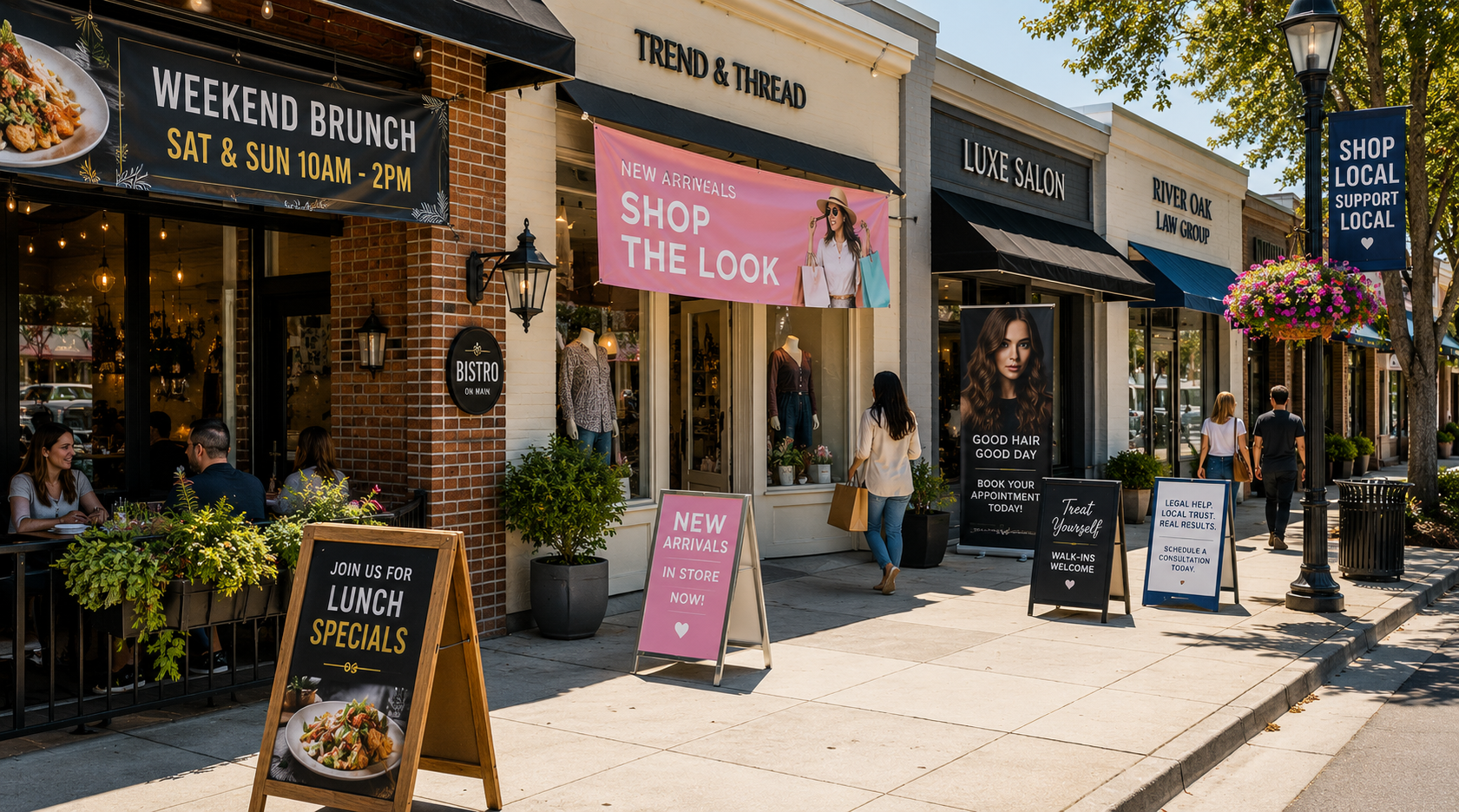
In a world full of digital ads and social media posts, one marketing tool still works every single day is your business sign. A well-designed sign attracts attention, reinforces your brand, and helps turn passersby into paying customers. Whether you’re creating a storefront logo sign, a promotional banner, or indoor directional signage, thoughtful design makes the difference between being overlooked and being remembered.


Here’s how to design a business sign that stands out—and drives real results.


1. Start With a Clear Goal

Before you choose colors or fonts, define what your sign needs to accomplish. Every sign should have one main job. When your goal is clear, the design becomes easier—and more effective. Trying to say too much at once often weakens the message. Strong signs focus on one purpose and do it well.


Are you:

  • Identifying your storefront?
  • Promoting a sale or event?
  • Directing customers inside?
  • Building brand awareness?


2. Keep the Message Simple

When it comes to signage, less is more. Your sign isn’t a brochure. It’s often viewed quickly—sometimes in just a few seconds. Long messages, small text, and cluttered layouts make it hard for people to understand what you’re offering. Think of your sign like a great headline. It should be clear, easy to read, and strong enough to spark interest immediately.


Instead:

  • Use short, clear headlines
  • Focus on one key message
  • Include only what supports that message


3. Make It Stand Out in Its Surroundings

Your sign doesn’t exist on its own—it competes with buildings, landscaping, lighting, and other businesses. High contrast improves visibility. A dark sign on a dark wall blends in. A bold, contrasting color stands out. If your space is dimly lit, brighter colors and larger text may be necessary. If your exterior is busy, a clean and simple layout will cut through the noise. Visibility always comes first.


For outdoor signage, consider:

  • The color of your building
  • Nearby signs
  • Natural elements like trees or brick


For indoor signage, think about:

  • Wall colors
  • Lighting levels
  • Customer sightlines


4. Design With Your Customer in Mind

An eye-catching sign speaks directly to the people you want to attract. A real estate sign targeting modern homeowners may feature clean fonts and a minimal layout. A family-owned restaurant might use warm colors and inviting imagery. People respond to visuals that feel familiar and relevant. When your design reflects your audience, it builds connection and trust.


Consider:

  • Who your ideal customer is
  • What style they connect with
  • What matters most to them


5. Use High-Quality Images and Graphics

Blurry or low-resolution images can quickly make your business look unprofessional. Strong visuals reinforce credibility. Whether it’s a polished logo, a product photo, or a lifestyle image, quality matters. A sharp, professional sign reflects a sharp, professional business.


Always use:

  • High-resolution images (300 DPI or higher)
  • Vector logos for crisp printing
  • Clean, professional graphics


6. Highlight Your Brand

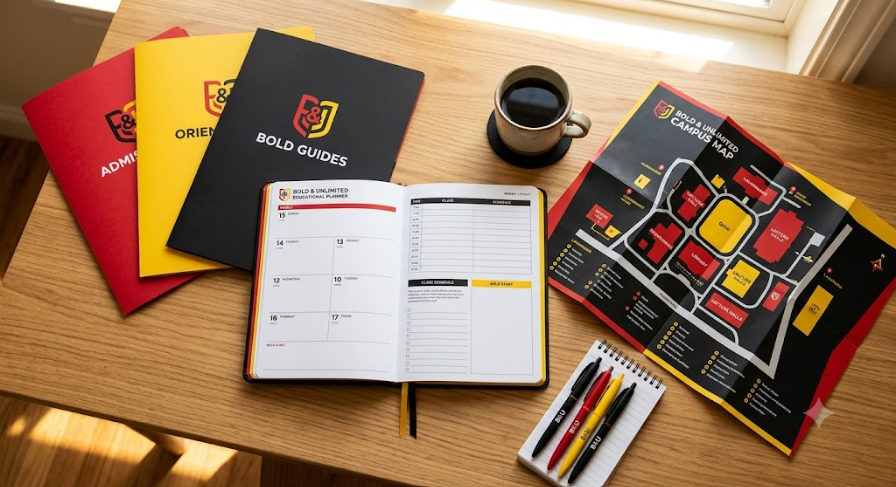
Your sign is an extension of your brand identity. Consistency builds recognition. When customers see the same style across your storefront, banners, and interior signage, your business becomes easier to remember. Some of the most effective signs focus almost entirely on branding—dimensional lettering above your entrance, a bold blade sign, or a clean lobby logo display. Brand visibility builds long-term growth.


Make sure your:

  • Logo is clearly visible
  • Brand colors are consistent
  • Fonts match your overall marketing


7. Keep Your Signage Consistent

If you’re running a promotion or updating your space, keep your signage cohesive. Your outdoor banners, window decals, and interior signs should feel connected. Consistent colors, messaging, and layout strengthen your brand and make your marketing more effective. When everything looks aligned, your business appears more established and trustworthy.


8. Work With the Right Sign Partner

Even the best design needs quality materials and production. At Hillview Design Print Media, we help local businesses create signage that not only looks great—but works hard for their growth.


Choosing an experienced print and sign provider ensures:

  • Durable materials
  • Clean finishes
  • Professional installation
  • Guidance from start to finish


Ready to Create a Sign That Works for You?

Your business sign is more than decoration. It’s a daily marketing tool that builds visibility, credibility, and customer traffic.

With clear goals, simple design, and the right production partner, you can create signage that truly stands out.


Call us today—and let’s design a sign that brings customers through your doors.


Revised By: Beth Walker
A millennial couple receiving print marketing from a real estate agent that is personal & memorable
By Beth Walker May 22, 2026
Print marketing helps real estate agents stand out, build trust, and stay top of mind with buyers and sellers in a crowded digital world.
Turn drive-by traffic into buyers with bold, clear garage sale signs.
By Beth Walker May 6, 2026
Great garage sale signs drive traffic—use bold text, high contrast, clear directions, and multiple signs to turn drive-bys into buyers.
A confident Bay Area small business owner reviews a glossy trifold brochure at a modern desk.
By Beth Walker April 22, 2026
Print isn't dead — it's your competitive edge. Learn how Bay Area businesses use print + digital together to cut through the noise and win more customers.
Make Graduation Unforgettable with Custom Signs
By Beth Walker April 1, 2026
Celebrate your graduate with custom signs and banners that stand out, feel personal, and create lasting memories for your family and community.
By Beth Walker March 19, 2026
Choose the right paper and finish to elevate your print, build trust with clients, and present your business with clarity and professionalism.
By Beth Walker February 5, 2026
Smart custom signs attract attention, guide customers, and strengthen your brand when planned, designed, and printed with purpose.
Order smarter using a digital print partner
By Beth Walker January 21, 2026
Avoid costly print mistakes by ordering smarter, choosing digital print partners, reviewing paper samples, and proofing before you print.
Business woman deciding on a print marketing strategy
By Beth Walker January 7, 2026
Small businesses see better results when they know their audience, market consistently, and connect across print and digital channels.
By Curtis Walker II, MBA May 19, 2020
THE FACT: Paper is one of the few truly sustainable products PAPER IS MADE FROM WOOD, A NATURAL RESOURCE THAT IS RENEWABLE, RECYCLABLE AND CAN BE MANAGED SUSTAINABLY. "Besides easily recognizable paper products (e.g. writing paper or paper towels), more than 5,000 products can be made from recycled paper." U.S. Environmental Protection Agency, 2016 1 In North America, paper is recycled more than any other commodity and the benefits include: extending the wood fiber supply ; reducing greenhouse gas emissions by avoiding methane emissions (released when paper decomposes in landfills or is incinerated); contributing to carbon sequestration ; reducing energy needed for paper production ; and saving landfill space . 1 These features, combined with the North American paper industry’s advocacy of responsible forestry practices , certification , the use of renewable biomass and advances in efficient paper-making technology , make paper one of the most sustainable products we use . • About 39% of the fiber used in paper-making in the U.S. is obtained through recycling . The rest comes from wood that is typically obtained through: 1) thinning of forest stands being grown to larger diameters to provide raw material for production of lumber and plywood 2) patch clear-cutting of smaller diameter trees managed for pulp production, and/ or 3) collection of chips and sawdust produced as by-products in the production of lumber. 2 • In Canada, 87% of the wood fiber used to make paper comes from a blend of sawmill residues (59%) and recycled paper (28%). 3 • The paper industry adheres to respected third-party certification standards, ensuring the paper you use has come from a sustainable forest source . These include the Forest Stewardship Council® (FSC®); the Sustainable Forestry Initiative® (SFI®) program; the American Tree Farm System (ATFS) and systems endorsed by the international Programme for the Endorsement of Forest Certification (PEFCTM). 4 • Globally, only about 10% of the world’s forests are certified – the majority of which are in North America . By sourcing certified products from a variety of credible standards, buyers are sending a message that they support sound forestry. 5 • Wood fibers can be grown, sourced and reused in a responsible way . Maximizing the use of recycled fibers and sourcing virgin fiber from credibly certified natural forests and plantations can reduce paper’s ecological footprint.” 6 1 U.S. Environmental Protection Agency, 2016 2 Dovetail Partners, 2016 3 Forest Products Association of Canada, 2012 4 American Forest & Paper Association, 2014 5 Sustainable Forestry Initiative, 2013 6 World Wildlife Fund, 2015 This article was originally published by The international Two Sides network, and can be found here
Hillview Design Print Media Icon
By Curtis Walker, II MBA February 20, 2020
Four simple ways to slow down to sell faster. Get the customer to move backward in their buying process. Find out where the customer is in their buying process. Probe for a second customer need. Schedule follow-up after your demo.